| |
|

|

| |
|
⚜️ Love what you're reading? Forward this edition to a friend or send them to subscribe here.
|
| |
|
This Week's Edition
|
|
Two weeks before the Fourth of July, Louisiana celebrates patriotic weekends across the state. Gonzales throws Stars and Stripes Festival with fireworks and Cajun food. Scott hosts Independence Day Celebration in the Boudin Capital. Slidell Heritage Festival returns June 27 with community pride. Oyster Festival buzz carries from the previous week. Louisiana gets patriotic, delicious, and community-focused early.
|
|
|
|
| |
|
June 16-22, 2026
|
|
Louisiana Gets Patriotic Early This Week
|
|

|
|
|
| The Stars and Stripes Festival arrives Saturday, June 20 in Gonzales with live music, food, fireworks, and early Fourth of July energy in the Jambalaya Capital of the World. Scott hosts the Independence Day Celebration Friday, June 26 in the Boudin Capital of the World with the same community spirit that defines Acadiana summer celebrations. Slidell's Heritage Festival returns Saturday, June 27 with live music, local vendors, food, and St. Tammany Parish pride.
Meanwhile, the Sunflower Trail & Festival blooms Saturday, June 20 in Gilliam with miles of sunflowers, local art, live music, and one of Louisiana's most stunning natural photo backdrops. From fireworks in Gonzales to boudin in Scott to sunflowers in Shreveport, Louisiana is celebrating the food, music, community, and traditions that make summer feel like the Fourth of July came early.
Perfect summer weather. Festival season rolling on. And from Gonzales to Scott to Slidell to Gilliam, Louisiana is doing what it does best—celebrating together. Here is what is happening across the state—June 16 through 22. |
|  | |
|
What's Happening in Your Area Code
|
| |
|
🎭 New Orleans / Kenner / Metairie - 504
|
|
| Live Music: |
| Frenchmen Street, Preservation Hall, and Tipitina's have shows all week as summer festival season continues. |
| Perfect weather for outdoor activities and celebrations throughout the metro area.
|
| | |
|
|
|
|
| Stars and Stripes Festival |
| Gonzales (Ascension Parish) · Saturday, June 20, 2026 |
| Stars and Stripes hits Gonzales on June 20 — an early Fourth of July celebration in the Jambalaya Capital of the World, with live music, food, fireworks, and the kind of patriotic Louisiana summer energy that gets you fired up two weeks before the actual holiday. [Learn more](https://www.visitascension.com)
|
| | |
|
|
|
🎶 Lafayette / Acadiana Area - 337
|
|
|
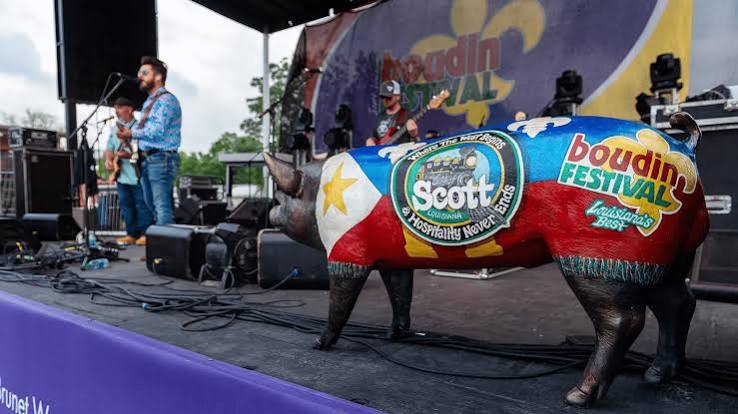
| Scott Independence Day Celebration |
| Scott (Lafayette Parish) · Friday, June 26, 2026 |
| The Scott Independence Day Celebration kicks off June 26 in the Boudin Capital of the World — the same town that throws one of the best food festivals in the spring turns around and throws one of the best Fourth of July celebrations in Acadiana. Mark it now. [Learn more](https://www.townofscott.org)
|
| | |
|
|
|
🚤 Houma / Thibodaux / Bayou Country - 985
|
|
| Slidell Heritage Festival |
| Old Town Slidell · Saturday, June 27, 2026 |
| The Slidell Heritage Festival fills the streets of Old Town Slidell with live music, local vendors, food, and a celebration of the Northshore's deep roots. A free, family-friendly Saturday that captures exactly what makes the Slidell community tick. [Learn more](https://www.visitslidell.com)
|
| | |
|
|
|
🌲 Shreveport / North Louisiana - 318
|
|
| Sunflower Trail & Festival |
| Hwy 3049, Gilliam (Caddo Parish) · Saturday, June 20, 2026 | 9 AM–3 PM |
| Miles of sunflowers peak along a scenic 30-minute drive from Shreveport-Bossier on the historic Boom or Bust Byway. The festival in Gilliam features local art, live music, food vendors, kids' crafts, and one of the most stunning natural photo backdrops in all of Louisiana. This one draws visitors from across the country and it's absolutely free. [Learn more](https://countryroadsmagazine.com/events/sunflower-trail-festival/)
|
| | | |
| When Woldenberg Park Transformed the Mississippi Riverfront Into a Cultural Gathering Place |
| October 1989, New Orleans riverfront. |
|
![]()
|
|
|
|
|
| For decades, the Mississippi River's edge in the French Quarter had been industrial—old wharves, warehouses, loading docks, and structures from New Orleans' maritime past that blocked public access to the water. The riverfront belonged to commerce, not community. Locals and tourists had no way to walk along the river, sit by the water, or experience the Mississippi the way they imagined.
|
|
|
| Then philanthropist Malcolm Woldenberg, who had spent his life giving to New Orleans, funded a bold vision: transform the industrial riverfront into a public park. American and international architects were commissioned to design a space that would honor the river's history while creating a gathering place for the future. In October 1989, Woldenberg Park officially opened, stretching from Canal Street down the riverfront toward Jackson Square.
| | The park became a canvas for art and culture. The New Orleans Holocaust Memorial Sculpture, created by Israeli artist Yaacov Agam, sits in the park's center—a work that presents different images from various angles, including a Star of David and a menorah. The Monument to the Immigrant, installed in 1995, honors the families who arrived at the port seeking new lives. Stainless steel sculptures like Ocean Song dot the landscape. Walking paths wind through the space, connecting the Aquarium of the Americas to Jackson Square.
| | But the real magic happened in the gathering. Festival International took over the park's grounds. The French Quarter Festival launched its World's Largest Jazz Brunch here. The New Orleans Oyster Festival, created in 2010, celebrates Louisiana's most iconic seafood along the riverfront Woldenberg made accessible. Outdoor concerts, art markets, and community events claimed the space that had once been warehouses and docks.
|
| Today, Woldenberg Park is the beating heart of the French Quarter's public life. From its opening in 1989, it transformed an industrial waterfront into a space that belongs to everyone—locals strolling with families, tourists discovering New Orleans, celebrations of food, music, and culture happening where ships once loaded cargo. |
| | |
| Do You Know the History of One of New Orleans' Most Iconic Favorites? |
|
| A beignet is a square piece of dough, fried until it puffs up into a pillow-like pastry, then generously dusted with powdered sugar. Dense, rectangular, yeast-risen, and impossibly irresistible—it's described as a French doughnut, but locals will tell you it's so much more than that.
| | Beignets arrived in Louisiana in the 18th century with French settlers and Acadian refugees expelled from Canada. The word "beignet" comes from the French verb "beigner," meaning "to fry." French colonists brought choux pastries and fried dough traditions with them, and over time, the recipe evolved in Louisiana's Creole kitchens, likely influenced by Spanish, African, and Acadian cooking. By the early 1800s, beignets were a morning tradition—golden, square, and clouded with powdered sugar, served with chicory coffee.
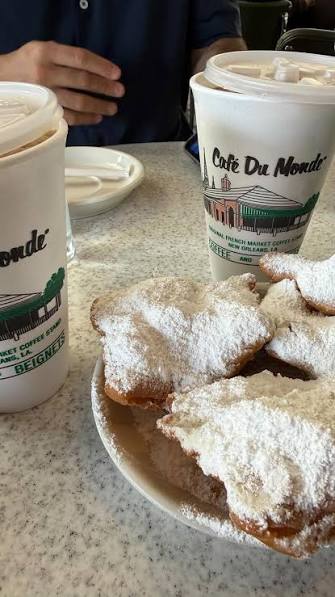
| | In 1862, during the Civil War, Café du Monde opened as a simple coffee stand in the French Market. Founded when the city was torn apart by war, the café served as a beacon of resilience and comfort, offering chicory coffee and beignets to weary locals and curious travelers. The café's visibility in the busy French Market, its open-air charm, and its reputation for quality drew people of all ages and classes. By 1928, a tourist had offered owner Louis Gillette $250 to give up the beignet recipe—equivalent to roughly $4,000 today. He refused. In 1958, the French Market doughnuts were officially rebranded as beignets, giving them the cultural name they deserved.
| | In 1986, the beignet was officially designated the state doughnut of Louisiana, cementing its place in official culinary history. Today, eating beignets remains a rite of passage for every New Orleanian and a must-do for visitors. While Café du Monde holds the spotlight, chefs across the city have begun to experiment. Fine dining restaurants now serve savory beignets stuffed with blue crab, foie gras, or boudin, dusted with parmesan instead of powdered sugar.
| | But the traditional beignet—three to an order, served hot at Café du Monde with café au lait, covered in powdered sugar so generously it looks like snow—remains the most authentic New Orleans experience. Sitting in the bustling café as the city awakens, watching servers hustle plates of powdery sugar-dusted hot beignets, sipping chicory coffee while the Mississippi River flows beyond the riverfront—that moment has been treasured for over 160 years and defines what it means to be in New Orleans.
|
| The answer: Café du Monde |
|
|
|
|
| | |
| Where the Wong Brothers Built a Chinese Palace on the Northshore and Changed Fine Dining |
| Trey Yuen opened in Mandeville in 1980 and revolutionized Chinese dining on the Northshore, blending traditional Chinese cuisine with Louisiana seafood and Creole influences in a restaurant designed to emulate a Chinese palace. |
|
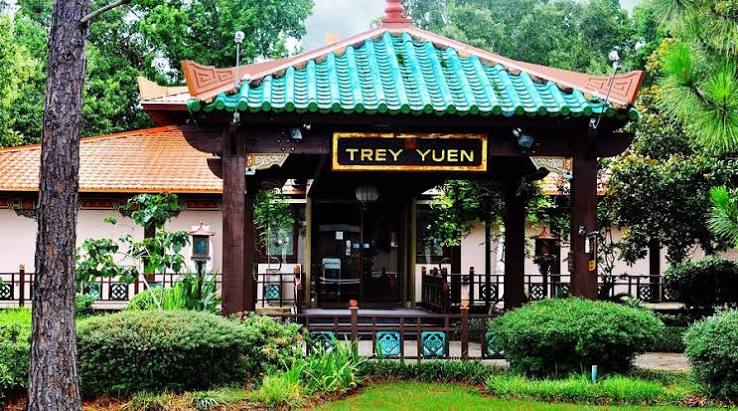
| Trey Yuen Cuisine of China — Where East Meets Louisiana on the Northshore
600 N Causeway Blvd, Mandeville | | The Wong brothers—Tommy, Frank, and their siblings—had been successful running a Chinese restaurant in Hammond since 1971. But in 1980, they envisioned something bigger. They wanted to build a restaurant that didn't just serve food, but transported guests to another world. On the Northshore in Mandeville, they created Trey Yuen, a restaurant designed by both American and Chinese architects to emulate a Chinese palace.
| | The building itself is a work of art. Imported rosewood ceilings, carved wall panels, antique furnishings, statues, and artwork grace the interior. Mother-of-pearl is inlaid into dining chairs. Outside, lush gardens, waterfalls, pagodas, and koi ponds surround the restaurant—a Louisiana bayou transformed into a Chinese landscape. Walking into Trey Yuen feels like stepping out of the Northshore and into another continent.
| | The Wong brothers revolutionized what Chinese dining meant in Louisiana. Their chefs—trained in traditional Chinese cooking—took fresh Louisiana seafood and applied Chinese technique and seasoning. Soft shell crab, crawfish, alligator, and Gulf shrimp appeared on the menu alongside traditional Chinese favorites. Chefs Tommy and Frank Wong combined local ingredients with Chinese mastery, creating a unique fusion that belonged nowhere else but Louisiana. Their work earned recognition in the Top 100 Chinese Restaurants in America and features at the White House.
| | Trey Yuen set new standards for fine dining on the Northshore. Families have cherished memories of celebrating milestones here for generations. Diners recommend the soft shell crab special, the shrimp and eggplant special, and the famous Crab Rangoon. The tradition of turning a statue's ball for wishes lives on—a moment of magic that makes Trey Yuen more than just a restaurant.
| | Today, forty-six years after opening, Trey Yuen remains a Northshore institution where East meets Louisiana, where the Wong brothers' vision of a palace still welcomes guests from across the country, and where fresh Gulf seafood meets the expertise of chefs trained in the traditions of China.
|
|
|
|
|
| | |
| |
|
⚜️ Sponsored by BayouRoots
|
|
|
|
|
Every Louisiana Name
Has a First Chapter.
|
|
When did your family first arrive in Louisiana? Which parish? What brought them here? BayouRoots traces every surname — any surname — through the historical record of this state.
|
|
|
|
Launch Discount — Save $10
$19.99 $29.99
|
Promo Code
LAUNCH
|
|
|
|
| |
|
| | |
|
|
![]()
|
|
Enjoy every minute of it. Mardi Gras only comes once a year.
|
| The final countdown to Mardi Gras is here. | | Until next time, |
| Michael C. |
|
| |
|
|
| |
|
